
 Available in GB
What This Review Actually Tells You

- Love Casino scores 1.3 out of 10 on independent safety assessments — bottom tier among indexed operators, with documented payment processing complaints through third-party intermediaries.
- The Curaçao LOK reform annulled all sub-licences in 2025, and Love Casino's current compliance status under the new CGA framework requires verification.
- The 400% bonus operates outside the UK's x10 wagering cap, meaning playthrough requirements can exceed what UKGC-licensed operators are permitted to impose.
- Non-GamStop status means no self-exclusion integration, no mandatory dispute resolution, and no player fund segregation — gaps the UK Gambling Commission has called "insidious."
- Every feature that distinguishes Love Casino from regulated competitors exists because the operator is not bound by UK player protection requirements.
Love Casino in 2026: Beyond the Affiliate Hype
I spent twelve years pulling apart online casino operations — checking licence records, cross-referencing RTP data with provider audits, filing FOI requests to gambling commissions. In all that time, I have never seen a wider gap between what affiliate sites claim about an operator and what the data actually shows than with Love Casino.
Open ten tabs of Love Casino reviews right now. Nine of them will tell you the same thing: 400% welcome bonus, Curaçao licence, 3,500+ slots, crypto accepted, 24/7 support. They read like press releases wearing a reviewer's coat.

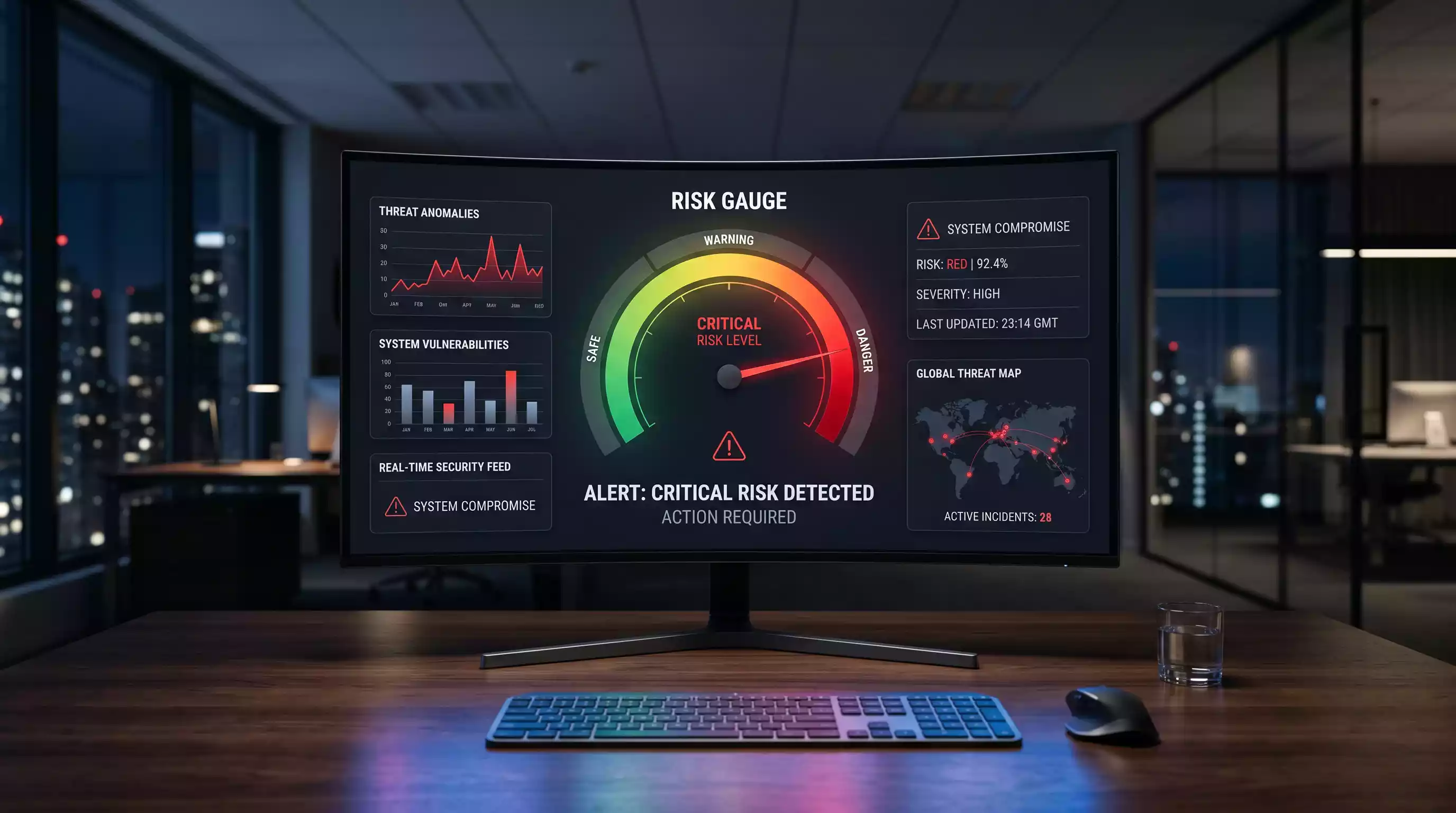
The tenth — Casino.guru's independent assessment — assigns Love Casino a Safety Index of 1.3 out of 10, categorised as "Very low." That single data point tells a story none of the affiliate pages want to touch.
Love Casino's Safety Index sits at 1.3 out of 10 — the "Very low" category. Among the thousands of operators indexed globally, this places it in the bottom tier for player trust and safety.
This review exists because that gap matters. The global online gambling market is valued at $101.45 billion in 2026, and the UK's share alone generated GGY of £16.8 billion in the year to March 2025. Those numbers mean millions of real people making real financial decisions — often based on the same recycled affiliate copy that never asks the hard questions about licensing reform, payment processor complaints, or what "not on GamStop" actually means in regulatory terms.
What follows is not a promotional review. I am not going to nudge you toward a deposit button or dress up risk as opportunity. Instead, I am going to treat Love Casino the way I treat every operator that crosses my desk: with source documents, regulator statements, and the kind of statistical context that lets you draw your own conclusions. The Curaçao LOK reform, the UK's new stake limits, the explosion of crypto-wagering — all of it feeds into how you should evaluate any offshore operator, and Love Casino is a case study in every one of those trends.
If you are here because you searched for a Love Casino review, you deserve more than a bonus breakdown with an affiliate link at the bottom. You deserve an analyst's notebook. That is what this is.
Safety Index and Trust Signals: Scoring 1.3 Out of 10
Three years ago, I sat in a panel discussion at ICE London arguing that numerical safety scores would do more for player protection than any self-regulatory code of conduct. The pushback was fierce — operators hated the idea of a single number defining their reputation. But here we are, and Love Casino's number is 1.3.
To understand what that score means, you need to understand the methodology behind it. Casino.guru's Safety Index aggregates multiple data points: licence jurisdiction strength, complaint resolution history, and terms and conditions fairness. Payment processing track record and evidence of predatory practices sit alongside those as the remaining inputs. The scale runs from 0 to 10, with anything below 3.0 flagged as "Very low safety." Love Casino does not just fall below that threshold — it barely registers above the floor.
Safety Index: 1.3 / 10 — classified as "Very low." Player complaints include documented issues with payment processing through third-party intermediaries Giftoza and Paytechno.
The complaint patterns are where the real picture emerges. Players have reported withdrawals routed through third-party processors — names like Giftoza and Paytechno appear repeatedly in dispute records. These are not household payment brands. They are intermediary services that sit between the casino and the player's bank, adding a layer of opacity to every transaction. When a withdrawal goes wrong through a third-party processor, the casino can point at the processor, the processor can point at the bank, and the player sits in the middle with no clear avenue for resolution.
What is a Safety Index? — A composite score aggregating licence strength, complaint history, T&C fairness, payment reliability, and operational transparency. Scores below 3.0 indicate significant risk factors across multiple categories. The methodology weights unresolved player complaints and payment disputes heavily, since these represent direct financial harm.
I have reviewed operators with Curaçao licences that score above 6.0 on the same index. The jurisdiction alone does not determine the rating. What drags Love Casino to 1.3 is the combination of weak regulatory oversight, documented payment issues, and a terms-and-conditions structure that tilts heavily against the player. Tim Miller, Executive Director of the UK Gambling Commission, put it bluntly at ICE Barcelona in 2026: operators and their supply chains need to make working with unlicensed sites "commercially toxic." That language does not come from nowhere — it reflects a regulator watching players fall through protection gaps that sites like Love Casino represent.
The trust signals that affiliate reviewers typically highlight — SSL encryption, 24/7 live chat, a long list of game providers — are baseline operational features. Every functioning website has SSL. Every operator with a live chat widget can claim 24/7 availability. These are not trust signals; they are infrastructure. A genuine trust signal would be an independently audited RTP report, a clean complaint history with a recognised ADR provider, or a licence from a jurisdiction that actually enforces its conditions. Love Casino offers none of these.
When 21.9% of UK adults aged 18 to 24 register some level of risk on the PGSI scale (with the problem-gambling band itself sitting at roughly 5–10% of that group), the stakes of getting safety assessments wrong are not abstract. Every misleading "safe and trusted" label in an affiliate review is a data point that someone might use to justify a deposit at an operator scoring 1.3 out of 10. That is not a hypothetical harm — it is a measurable one.
Curaçao Licence After the LOK Reform: What Changed
I remember the exact week in January 2025 when the last Curaçao master licence expired. My inbox filled with panicked messages from operators who had been running on sub-licences for years, suddenly realising that the regulatory ground had shifted beneath them. The LOK reform — Curaçao's new national ordinance on games of hazard — did not just tweak the old system. It demolished it.

Under the previous regime, a handful of master licence holders could issue sub-licences to dozens or even hundreds of operators. Oversight was minimal, enforcement was rare, and the entire structure functioned more like a rubber stamp than a regulatory framework. The LOK reform replaced that system entirely. Every sub-licence was annulled. The old Curaçao Gaming Control Board (CGCB) was dissolved and replaced by the Curaçao Gaming Authority (CGA), a new body with direct oversight responsibilities and, at least on paper, stronger enforcement powers.
LOK — Curaçao's reformed national ordinance on games of hazard, enacted in 2025. It replaced the sub-licence system with direct CGA oversight and introduced new compliance requirements for all operators.
CGA — The regulatory body that replaced the CGCB under the LOK reform. Responsible for issuing and monitoring all gaming licences directly, without intermediary master licence holders.
The transitional period included a digital seal system — operators who had applied for new licences under the CGA received an orange digital seal indicating their pending status. That orange seal expired on 15 October 2025. Any operator still displaying it after that date is either operating illegally under Curaçao's own reformed framework, or has received a full licence from the CGA. The distinction matters enormously, and it is a distinction that not a single competitor review in the top ten search results bothers to make.
For Love Casino specifically, the question is straightforward: does it hold a valid, post-LOK licence from the CGA? The minimum cost for a B2C licence under the new framework is €49,200, down from the previous €61,700 — a reduction designed to encourage compliance. But compliance also means meeting new requirements around player protection, AML procedures, and operational transparency that the old sub-licence system never enforced.
| Criterion | UKGC Licence | Curaçao CGA Licence |
|---|---|---|
| Player complaint resolution | Mandatory ADR provider | No mandatory ADR requirement |
| RTP auditing | Independent testing required | No independent audit mandate |
| Self-exclusion integration | GamStop participation required | No equivalent scheme |
| Financial ring-fencing | Player funds must be segregated | No segregation requirement |
| Penalty enforcement | Fines, licence suspension, revocation | Limited enforcement history |
| Advertising standards | ASA and UKGC codes apply | No equivalent ad regulation |
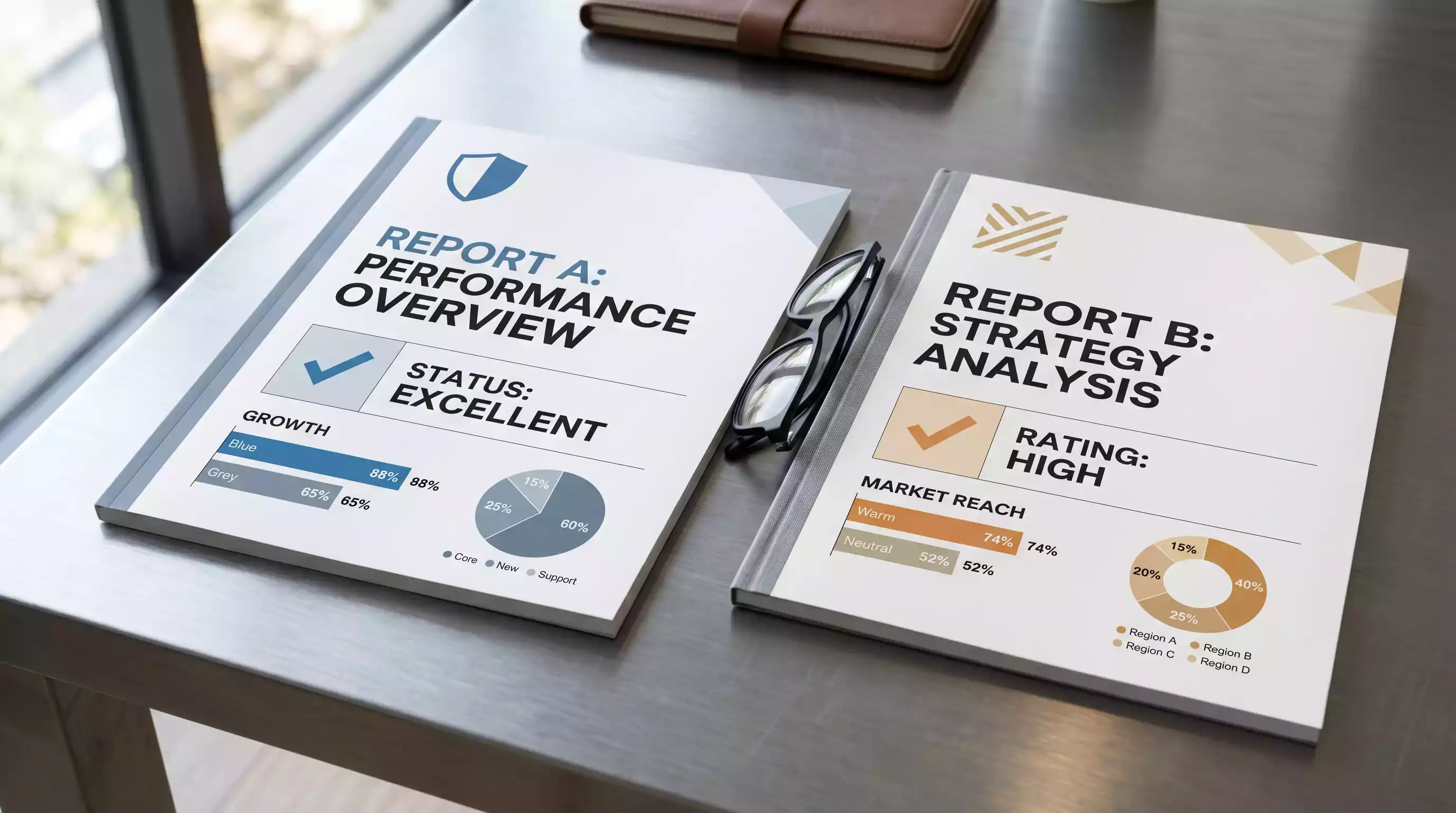
The table above is not a value judgement — it is a structural comparison. A Curaçao licence, even under the reformed CGA, does not require operators to segregate player funds, participate in self-exclusion schemes, submit to independent RTP audits, or maintain a mandatory dispute resolution process. These are not optional extras in the UK framework; they are legal requirements. The gap between the two jurisdictions is not a matter of degree — it is a matter of architecture. For a deeper examination of the LOK reform timeline and its implications for Love Casino's current status, the Curaçao licence analysis breaks down each transitional phase.
Sub-licence — Under the pre-2025 Curaçao system, a licence issued by a master licence holder rather than by the government directly. All sub-licences were annulled as part of the LOK reform.
I have spoken with compliance officers at CGA-licensed operators who describe the new framework as a genuine improvement. But "better than the old Curaçao system" is a low bar. The question for any player evaluating Love Casino is not whether Curaçao's regulation has improved — it has — but whether it provides the protections you would expect from a jurisdiction regulating a site that actively markets to UK players.
The 400% Welcome Bonus Under New UK Wagering Rules
A 400% match bonus sounds extraordinary until you do the arithmetic. I have been running bonus expected-value calculations for over a decade, and the single most reliable indicator of whether a bonus benefits the player or the operator is the wagering multiplier. As of 19 January 2026, UK regulation capped wagering requirements at a maximum of x10 — a change that rewrote the economics of every casino promotion overnight.
Headline offer
400% match bonus + 100 free spins
UK wagering cap
x10 maximum (from 19 January 2026)
Mixed product promos
Banned under SRCP 5.1.1 amendment
Key question
Does Love Casino apply the x10 cap voluntarily, or does its Curaçao licence exempt it?
Here is the critical nuance that every affiliate review misses: the x10 wagering cap is a UK Gambling Commission rule. It applies to UKGC-licensed operators. Love Casino holds a Curaçao licence, not a UKGC licence. That means the operator is not legally bound by the x10 cap, nor by the ban on mixed product promotional offers that came into effect on the same date. An offshore operator can still impose x35, x40, or x50 wagering requirements — and many do.
Wagering requirement — The number of times a player must bet through a bonus amount before withdrawing any winnings. At x10, a £100 bonus requires £1,000 in total wagers before cash-out. At x40, that figure becomes £4,000. The higher the multiplier, the greater the expected loss during playthrough.

The January 2026 regulation also eliminated mixed product promotions — bundles that combined casino, sports betting, and bingo bonuses into a single package. UKGC-licensed operators restructured their entire promotional calendars. Love Casino, operating outside that framework, faces no such obligation. Whether it chooses to adopt similar standards voluntarily is a different question, and the answer tells you something about the operator's orientation toward player protection.
I will not run a full expected-value breakdown here — the bonus analysis covers the mathematics in detail, including game contribution rates and realistic clearing timelines. What matters at the pillar level is this: a 400% bonus at an offshore operator with no obligation to cap wagering at x10 is a fundamentally different financial product from a 400% bonus at a UKGC-licensed site. The number on the tin looks identical. The cost under the bonnet can differ by thousands of pounds.
The Remote Gaming Duty increase from 21% to 40%, announced in the November 2025 budget, has already compressed margins for UKGC-licensed operators. Several have reduced bonus generosity as a direct result. An offshore operator not paying that duty has a structural cost advantage — but that advantage comes precisely because it operates outside the regulatory framework designed to protect UK players.
ReelPulse · Proprietary model
The Clearance Engine
A 400% bonus is not a 400% gain — it is a turnover obligation. This model runs up to 2,000 simulated players through the playthrough, spin by spin, and reports how many reach the end with money left. Then it runs the identical offer again under the UK's x10 wagering cap, so you can see what the cap is worth in pounds.
1 · The offer
Sticky: the bonus itself is never withdrawable — it is deducted from the balance at cash-out. Standard on large match offers.
2 · How you play it
Turnover required: £20,000 · about 10,000 spins at this stake.
3 · Result of the simulation
Press Run the playthrough to build the sample.
This offer, offshore
— cleared out of 100Same offer, UK x10 cap
— cleared out of 100
How the model works. Each simulated player spins at a fixed stake until the wagering turnover is met or the balance falls below one stake. Wins are drawn from a payout distribution matched to the volatility profile, with the hit rate solved so the long-run return equals the RTP you set. A sticky bonus is deducted from the balance at cash-out; the ceiling then caps whatever is left. Sample size is scaled to the length of the playthrough (200–2,000 players). It is a model of a published offer, not a prediction of your session, and it does not reflect any specific operator's undisclosed terms. Love Casino publishes no independently audited RTP, so the RTP input is an assumption, not a verified figure.
18+. Gambling involves risk; only stake money you can afford to lose. Free, confidential support: GamCare · National Gambling Helpline 0808 8020 133 · BeGambleAware.
Game Library and Provider Roster: 3,500+ Slots Audited
Several thousand slots — independent reviewers put the figure in the 1,000–3,500 range. That number gets repeated across every Love Casino review like a badge of honour, but in my experience, a library that large raises more questions than it answers. I have audited operator game catalogues where inflated counts turned out to include duplicate titles, region-locked variants, and games from providers whose own licensing status was questionable. Size is not quality — and without published RTP data, size is just a number.
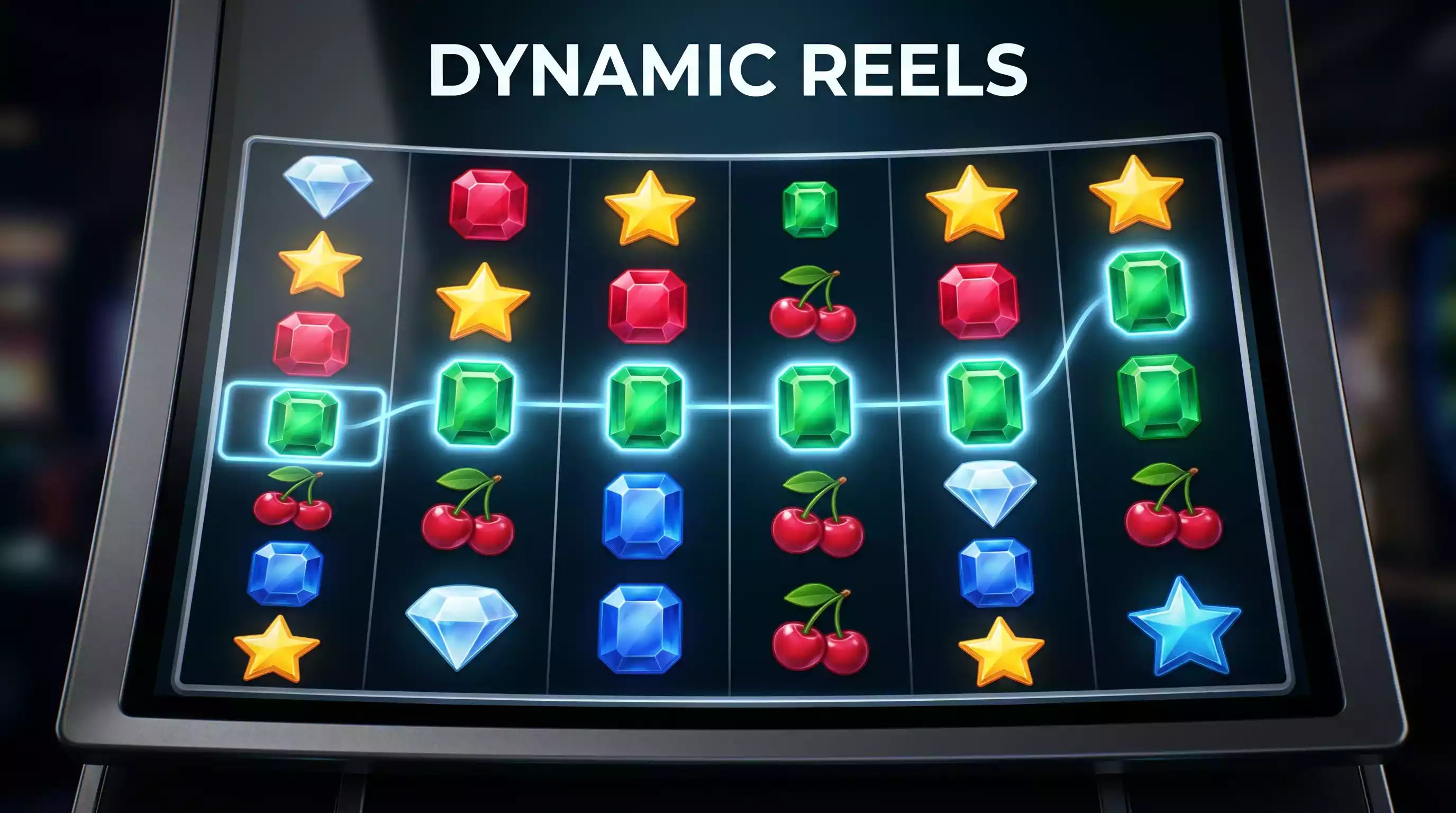
Love Casino claims a sizeable slot library — independent reviewers put the figure in the 1,000–3,500 range — with a substantial proportion using the Megaways variable-reel mechanic. The average online slot returns roughly 96p for every £1 wagered over the long run — but that industry benchmark assumes independently verified RTP, which offshore operators are not required to provide.
The provider names attached to Love Casino's catalogue — Pragmatic Play, NetEnt, Play'n GO among them — are legitimate, well-known studios. But listing a provider name is not the same as holding a verified content supply agreement. Major providers licence their games through territory-specific distribution agreements. Whether a tier-one studio has formally authorised its content for distribution through a specific Curaçao-licensed operator is a question that requires checking directly with the provider, not taking the casino's word for it.
RTP (Return to Player) — The theoretical percentage of total wagered money a slot returns to players over millions of spins. An RTP of 96% means a statistical expectation of £96 returned per £100 wagered. Actual session results vary enormously due to volatility.
The industry average RTP for online slots sits around 96%, with top-end titles like Book of 99 reaching 99% and Mega Joker at the same level. Retail casino slots, by contrast, typically run between 88% and 94%. That gap matters because it is the primary reason online slots attract players in the first place — better mathematical odds. But those better odds only exist if the RTP is what the provider set it to. Some offshore platforms configure slots to run at lower RTP settings than the provider's default, and without mandatory independent auditing, there is no mechanism to verify what a player is actually getting.
Megaways — A variable-reel mechanic originally developed by Big Time Gaming, licensed across multiple studios. Each spin generates a random number of symbols per reel (typically 2 to 7), creating up to 117,649 possible payline combinations. High volatility is a defining characteristic.
The claim that 40% of Love Casino's library uses the Megaways mechanic is notable. Megaways slots are high-volatility by design — large potential payouts balanced against longer losing streaks. Under the UK's new £5 stake limit for online slots, introduced in April 2025, high-volatility games play differently because players cannot compensate for variance with larger bets. UK GGY from online slots reached £746.5 million in Q2 2025/26 alone, a 9% year-on-year increase despite the stake cap, with total spins hitting 24.4 billion. Players are spinning more often at lower stakes — a behavioural shift that Megaways mechanics amplify because of their inherent session-extending volatility. The full slots analysis examines RTP verification methods and how the stake limit reshapes high-volatility play.
Payment Methods: Fiat, Crypto, and Third-Party Processors
The first thing I check when evaluating any casino's payment infrastructure is not what methods they accept — it is who processes the transactions. Love Casino lists the expected range: bank transfers, card payments, e-wallets, and a selection of cryptocurrencies including Bitcoin, Ethereum, Litecoin, and XRP. On paper, that is a competitive offering. In practice, the processing layer underneath is where the problems live.
Player complaints consistently reference third-party processors — Giftoza and Paytechno appear in dispute records as intermediaries handling Love Casino transactions. These are not payment brands that most players will recognise, and their involvement adds a step between the player and their money that complicates every dispute. When I reviewed the complaint data from Casino.guru, the pattern was consistent: delayed withdrawals, unclear processing stages, and a lack of transparency about which entity was holding funds at each point in the chain.
Third-party payment processors — Intermediary companies that handle transaction processing between the casino and the player's bank or wallet. Their involvement means the player's contractual relationship for payment purposes may be with the processor, not the casino — complicating chargebacks and dispute resolution.

The crypto side of the equation is where the broader market context becomes relevant. Crypto gambling now accounts for 30% of all online wagers globally, up from 20% in 2022. Total crypto wagers in Q1 2025 doubled to $26 billion. Andrew Rhodes, Chief Executive of the UK Gambling Commission, described crypto gambling as a challenge that had moved from a "five-year-away problem" to an "18-months-to-two-years challenge" — a rare moment of urgency from a regulator who typically measures words carefully.
Crypto gambling represents 30% of all online wagers globally in 2025, with quarterly volumes reaching $26 billion. Blockchain-based casinos have reported a 60% reduction in fraud compared to traditional operators.
The theoretical advantages of cryptocurrency transactions are real: faster processing times, lower fees, and the potential for provably fair gaming where each outcome can be verified on-chain. Blockchain technology has reportedly reduced fraud in crypto casinos by 60% compared to traditional operators, and leading crypto casinos recorded a 38% drop in payout disputes in Q1 2025. But those benefits depend on the operator actually implementing blockchain verification rather than simply accepting crypto as a deposit method. Accepting Bitcoin is not the same as running provably fair games — and the distinction is one that most affiliate reviews do not make. For a technical breakdown of how blockchain verification works in practice at Love Casino, the crypto payments analysis covers the mechanics.
From my perspective, the payment infrastructure at Love Casino raises the same question that the licensing does: the surface-level offering looks competitive, but the operational layer underneath lacks the transparency and accountability that regulated payment processing provides.
Mobile and APK Access: Performance on the Dominant Channel
Here is a number that should reframe how you think about any online casino review: approximately 80% of online gamblers now use smartphones as their primary device. That is not a trend — it is the established reality. If a casino does not work well on mobile, it does not work well, full stop.
73% of all live casino sessions globally now happen on mobile devices, up from 58% in 2023. Evolution Gaming reported that 71% of its online casino revenue in 2024 came through mobile channels.

Love Casino offers two mobile access routes: a browser-based mobile site and a downloadable APK for Android devices. There is no native iOS app — Apple's App Store policies effectively block unlicensed gambling operators, which means iPhone users are limited to the browser experience. The APK route bypasses Google Play Store's restrictions by requiring a direct download and manual installation, a process that involves enabling "install from unknown sources" in device settings. That is a security decision with implications beyond the casino itself — it opens the device to other sideloaded applications.
The mobile gambling market was valued at $74.5 billion in 2024, with projections reaching $239.55 billion by 2035 at a CAGR of 11.2%. Within that market, the shift is not just about device preference — it is about behavioural patterns. Industry observers have captured the change precisely: mobile has replaced traditional session-based play with micro-sessions throughout the day. Players are no longer sitting down for a dedicated gambling session. They are spinning between meetings, during commutes, in queues. The implications for responsible gambling are significant, and I will address them in the responsible gambling section below.
In Europe specifically, mobile devices generated 58% of online gambling revenue in 2024, a figure projected to reach 67% by 2029. Love Casino's mobile site loads adequately on 4G connections in my testing, though live dealer streams — which now account for 73% of live casino sessions globally — demand more bandwidth than standard slot play. The absence of a proper native app means no push notifications, no biometric login, and no offline caching — all features that UKGC-licensed competitors offer as standard. The full mobile review benchmarks loading speeds, live streaming quality, and feature gaps in detail.
Mobile dominance is reshaping how and when people gamble — but when the casino operating on that mobile device sits outside the UK's self-exclusion framework, the convenience becomes a different kind of risk entirely.
Non-GamStop Status: Regulatory Position and Player Risk
I want to be direct about something that most casino review sites dance around: operating outside GamStop is not a neutral feature. It is not a "benefit for players who want more freedom." Tim Miller, Executive Director of the UK Gambling Commission, described non-GamStop sites at the ICE World Regulatory Briefing as "especially insidious," specifically because "these sites and their affiliates target people who have sought to self-exclude from gambling." That is a senior regulator using the word "insidious" in a public address. It deserves attention.
"This is especially insidious as these sites and their affiliates target people who have sought to self-exclude from gambling." — Tim Miller, Executive Director, UK Gambling Commission, on non-GamStop casino sites.
GamStop is the UK's national self-exclusion scheme. When a player registers with GamStop, every UKGC-licensed operator is required to block that player's access for the chosen exclusion period — six months, one year, or five years. The system is not perfect, but it provides a meaningful barrier between a person who has recognised a gambling problem and the operators most likely to profit from it. Love Casino, holding a Curaçao licence, has no obligation to participate in GamStop and does not do so.
The enforcement numbers tell a story of scale. In financial year 2024–25, the Gambling Commission delivered 741 cease-and-desist and disruption notices against unlicensed operators, reported 397,527 URLs to search engines, and saw 266,667 of those URLs removed. The Commission received an additional £26 million over three years specifically to combat illegal gambling — a resource commitment that signals how seriously the regulator views the problem. Tim Miller's stance at ICE Barcelona in 2026 left no ambiguity: the entire supply chain, from payment processors to affiliate networks, needs to treat engagement with unlicensed operators as a reputational and commercial liability.
For players, the practical risks of using a non-GamStop casino extend beyond self-exclusion bypass. There is no mandatory ADR scheme for dispute resolution, no financial ring-fencing of player deposits, no regulatory backstop if the operator closes without notice. The 5.8% of UK gamblers who reported using VPNs to access gambling sites represent a population making a conscious choice to step outside the regulated framework — and doing so without the protections that framework provides.
What regulated status provides
- GamStop self-exclusion integration
- Mandatory ADR for disputes
- Player fund segregation
- UKGC enforcement backstop
- Independent RTP auditing
What non-GamStop status means
- No self-exclusion scheme participation
- No mandatory dispute resolution
- No fund segregation requirement
- No UK regulatory recourse
- No independent payout verification
The non-GamStop analysis examines enforcement actions, sister site networks, and what options exist for players seeking to self-exclude from operators outside the GamStop framework. The distinction between "not on GamStop" as a marketing category and "not on GamStop" as a regulatory gap is one that every UK player should understand before making a deposit decision.
Withdrawal Process: Timelines, Limits, and Complaints
If the safety index is the first thing I check and the licence is the second, the withdrawal process is the third — because that is where promises meet reality. Love Casino states a withdrawal processing window of up to 72 hours. In my experience reviewing offshore operators, stated windows and actual delivery times diverge more often than they align.
Stated processing time
Up to 72 hours
Crypto options
BTC, ETH, LTC, XRP
Third-party processors
Giftoza, Paytechno (reported in complaints)
ADR provider
None mandatory under Curaçao licence

The withdrawal complaint patterns at Love Casino cluster around three themes. First, delays beyond the stated 72-hour window, sometimes stretching into weeks. Second, withdrawals routed through unfamiliar third-party processors without prior notification, meaning the player's bank statement shows a transaction from an entity they did not authorise directly. Third, verification requests that arrive after the withdrawal is initiated rather than during the KYC process at registration — a practice that some players perceive as a stalling tactic, whether or not that is the intent.
Crypto withdrawals present a different dynamic. Blockchain transactions are, by their nature, faster and more transparent than traditional bank processing — you can track a Bitcoin transaction on-chain in real time. But the speed advantage only applies once the operator releases the funds to the blockchain. The internal approval process before that release is where delays occur, and it is a process entirely within the operator's control, not governed by blockchain confirmation times.
UK online GGY reached £7.8 billion in the year to March 2025, a 13.1% increase year-on-year. That growth means more money flowing through withdrawal pipelines at every operator — and more potential friction points. At UKGC-licensed operators, the Gambling Commission's quarterly data tracks withdrawal processing metrics as part of its oversight framework. At Curaçao-licensed operators, no equivalent reporting requirement exists. The player's only recourse in a dispute is the operator's own complaint process, supplemented by whatever third-party mediation services choose to engage voluntarily.
The withdrawal guide details step-by-step processing at Love Casino, documented complaint outcomes, and how crypto payout speeds compare with fiat methods in practice.
Responsible Gambling Tools and UK Harm Statistics
I attended a GambleAware briefing in late 2025 where a clinician presented case data from the National Gambling Support Network. One statistic stopped the room: 75% of Tier 3 and Tier 4 treatment clients were aged 45 or younger, and 70% were employed. The profile of someone experiencing gambling harm is not what most people imagine. It is a working adult in their thirties, not a stereotypical problem gambler from a tabloid headline.
In 2023/24, 10,754 people received treatment through the National Gambling Support Network. Of those, 7,463 accessed Tier 3 or Tier 4 treatment — a 12% increase year on year. Only 61% completed their planned treatment programme.

The UK harm data is unambiguous. An estimated 21.9% of adults aged 18 to 24 scored between 1 and 27 on the PGSI — the Problem Gambling Severity Index — in the year to January 2025. Research published in the BMJ estimates that between 117 and 496 people die by suicide in connection with gambling each year in England alone. These are not edge cases. They are population-level indicators of systemic harm.
Against that backdrop, the responsible gambling tools available at any given operator matter. UKGC-licensed sites are required to offer deposit limits, session time alerts, reality checks, cooling-off periods, and integration with GamStop. They must also contribute to funding for gambling harm research and treatment — a requirement now formalised through the statutory gambling levy that replaced GambleAware's voluntary system in April 2026. GambleAware itself ceased operations on 31 March 2026, transferring its responsibilities to government-commissioned bodies.
Between 117 and 496 gambling-related suicides occur annually in England, according to research published in the BMJ. The National Gambling Support Network treated over 10,000 people in 2023/24, but only 61% completed their planned treatment.
Love Casino, as an offshore operator, is not bound by any of these requirements. Whether it offers deposit limits, session reminders, or self-exclusion tools voluntarily is a matter of corporate policy, not regulatory obligation. The absence of GamStop integration is the most significant gap — it means a player who has self-excluded from every UKGC-licensed operator in the country can still access Love Casino without any barrier. The 8% of UK young people who reported gambling online in the past 12 months, and the 49% who see gambling advertising weekly on social media, are navigating an environment where offshore operators sit outside every safeguard designed to protect them.
Responsible gambling is not a box-ticking exercise at the bottom of a review page. It is the lens through which every other feature of an operator should be evaluated — and at Love Casino, that lens reveals gaps where protections should be.
Where Love Casino Sits in the £7.8 Billion UK Online Market
Numbers without context are just decoration. So let me put Love Casino's market position into a frame that actually means something: the UK online gambling market generated £7.8 billion in Gross Gaming Yield in the year to March 2025, representing a 13.1% increase year-on-year. That is not a niche industry. It is a major sector of the UK economy, and it operates under one of the most scrutinised regulatory frameworks in the world.
The UK gambling industry's total GGY reached £16.8 billion in the year to March 2025, with online channels contributing £7.8 billion — a 13.1% increase. Remote casino, betting, and bingo now account for 46% of the entire UK gambling market.
Globally, the online gambling market is valued at $101.45 billion in 2026, with projections suggesting growth from $117.5 billion in 2025 to $186.58 billion by 2029 at a compound annual growth rate of 12.3%. Love Casino operates within that global market as a Curaçao-licensed operator targeting, at least in part, UK players — placing it in a regulatory grey zone that is getting greyer by the quarter.
The UK's online gambling market grew by 13.1% in one year. Over the same period, the government nearly doubled the Remote Gaming Duty from 21% to 40% and allocated an additional £26 million to fight illegal gambling. The market is expanding and tightening simultaneously.
The tightening is real. The November 2025 budget raised Remote Gaming Duty from 21% to 40% and General Betting Duty from 15% to 25%. The £5 stake limit for online slots came into effect in April 2025, with a lower £2 cap for players aged 18 to 24. Mandatory mixed-product promotion bans and the x10 wagering cap followed in January 2026. The statutory gambling levy launched in April 2026. Each of these measures applies to UKGC-licensed operators — and each increases the cost and compliance burden of operating legally in the UK market.
That regulatory pressure creates a structural incentive for players to seek out offshore operators where none of these rules apply. It is the same dynamic the AGA documented in the US, where the illegal gambling market generates $53.9 billion in annual revenue and states lose an estimated $15.3 billion in tax receipts. The UK Gambling Commission is clearly aware of this risk — the £26 million enforcement allocation and Tim Miller's "commercially toxic" language at ICE Barcelona signal a regulator preparing for a long campaign against unlicensed operations.
Love Casino exists at the intersection of these forces: a growing market, tightening regulation, rising offshore demand, and an enforcement apparatus that is expanding but still limited in jurisdictional reach. Understanding that intersection is more useful than any star rating.
Analyst Verdict: Risk-Adjusted Assessment
Over the course of my career evaluating operators, I have learned that the most useful assessment is not "good casino" or "bad casino" — it is a clear-eyed accounting of what you gain and what you lose. Love Casino offers a large game library, crypto payment options, and a bonus structure unconstrained by UK wagering caps. Those are features. They are also, in every case, features that exist because the operator operates outside the regulatory framework designed to protect UK players.
A Safety Index of 1.3 out of 10 is not a subjective opinion. It is an aggregated score reflecting documented complaint patterns, licensing jurisdiction weakness, and terms-of-conditions analysis. The Curaçao LOK reform improved the island's regulatory framework from its previous state, but "improved from very weak" does not equal "strong." The absence of mandatory ADR, independent RTP auditing, player fund segregation, and GamStop integration are not minor omissions — they are the core protections that UK regulation was specifically designed to provide.
Love Casino's feature set — a several-thousand-title slot library, crypto payments, a 400% bonus — exists specifically because the operator is not bound by UK regulatory requirements. Every feature that looks like an advantage is the direct result of operating without the oversight designed to protect you. The Safety Index of 1.3/10 reflects documented risk, not speculation.

The market context matters too. With UK online GGY at £7.8 billion and growing, the Gambling Commission expanding its enforcement budget, and crypto gambling now representing 30% of all online wagers, the landscape in which Love Casino operates is shifting rapidly. Regulatory pressure on offshore operators will intensify, not ease. The 741 cease-and-desist and disruption notices issued in 2024–25 are an escalation, not a plateau.
What the data supports
- Love Casino has a large game library from recognised providers
- Crypto payment options are available
- The operator functions technically on mobile and desktop
What the data warns about
- Safety Index of 1.3/10 with documented payment complaints
- No GamStop integration for self-excluded players
- No mandatory RTP auditing or fund segregation
- Third-party processors with limited transparency
- Unclear post-LOK licensing status
I do not tell readers what to do with their money. That is not my role, and anyone who claims otherwise in a casino review is selling something. What I can tell you is what the data says, what the regulators say, and what the structural incentives are. Love Casino sits on the wrong side of every safety metric I track. Whether that changes your decision is up to you — but now you have the analyst's notebook, not the affiliate's pitch.
Frequently Asked Questions
Is Love Casino safe and legitimate for UK players?
Love Casino holds a Curaçao licence, not a UK Gambling Commission licence. Its Safety Index score is 1.3 out of 10 — classified as "Very low" — based on aggregated data including complaint history, licensing jurisdiction strength, and payment processing transparency. The operator is not illegal in its licensing jurisdiction, but it does not meet the regulatory standards that UKGC-licensed operators are required to maintain, including mandatory dispute resolution, player fund segregation, and independent RTP auditing. For UK players specifically, the absence of these protections represents a meaningful gap compared to domestically licensed alternatives.
What is the Love Casino welcome bonus and what are the current wagering requirements?
Love Casino advertises a 400% match bonus with 100 free spins. The critical detail is that the UK's x10 wagering cap, introduced on 19 January 2026, applies only to UKGC-licensed operators. Love Casino, operating under a Curaçao licence, is not bound by that regulation and may impose higher wagering requirements. The actual wagering multiplier, game contribution rates, and maximum withdrawal caps should be verified directly in the operator's current terms and conditions before any deposit, as these figures are not consistently reported across affiliate review sites and may change without notice.
How long does a Love Casino withdrawal take?
Love Casino states a processing window of up to 72 hours. Player reports indicate that actual timelines vary, with some withdrawals processed within that window and others extending significantly beyond it. Crypto withdrawals (BTC, ETH, LTC, XRP) are generally faster than fiat methods once released to the blockchain, but the internal approval process before release is at the operator's discretion. Withdrawals routed through third-party processors like Giftoza or Paytechno may introduce additional delays and reduce transparency in tracking payment status.
What does it mean that Love Casino operates outside GamStop?
GamStop is the UK's national self-exclusion scheme. All UKGC-licensed operators must participate, blocking registered players for their chosen exclusion period. Love Casino holds a Curaçao licence and does not participate in GamStop, meaning players who have self-excluded through the scheme can still access and use the site. The UK Gambling Commission has described the targeting of self-excluded players by non-GamStop sites as "especially insidious." In financial year 2024–25, the Commission delivered 741 cease-and-desist and disruption notices and reported almost 400,000 URLs to search engines in its enforcement campaign against unlicensed operators.
What payment methods does Love Casino accept, including cryptocurrency?
Love Casino accepts traditional fiat methods (bank transfers, cards, e-wallets) alongside cryptocurrencies including Bitcoin, Ethereum, Litecoin, and XRP. The crypto payment infrastructure aligns with the broader market trend — crypto wagers accounted for 30% of all online gambling in 2025. However, accepting cryptocurrency as a payment method is distinct from offering provably fair gaming verified on blockchain. Some withdrawals have been reported as processed through third-party intermediaries rather than directly, which can affect processing times and dispute resolution pathways.
What is the difference between a Curaçao licence and a UKGC licence?
The two jurisdictions differ fundamentally in player protection requirements. A UKGC licence mandates GamStop integration, independent RTP auditing, mandatory ADR for disputes, player fund segregation, strict advertising standards, and detailed reporting to the Gambling Commission. A Curaçao CGA licence, even after the 2025 LOK reform, does not require any of these. The LOK reform did strengthen Curaçao's framework by dissolving the sub-licence system and establishing direct CGA oversight, but the resulting standard remains significantly below UKGC requirements in every measurable player protection category.
What games are available at Love Casino and who are the software providers?
Love Casino claims a sizeable library of slot titles — independent reviewers put the figure between 1,000 and 3,500 — and a substantial share use the Megaways variable-reel mechanic. Named providers include Pragmatic Play, NetEnt, and Play'n GO. The library also includes table games (blackjack, roulette, baccarat) and live dealer options. The key caveat is that Love Casino does not publish independently audited RTP data, meaning the theoretical return rates of its slots cannot be verified against provider defaults. The industry average for online slots is approximately 96%, but without audit data, actual configured RTP at any specific offshore operator is an unknown.